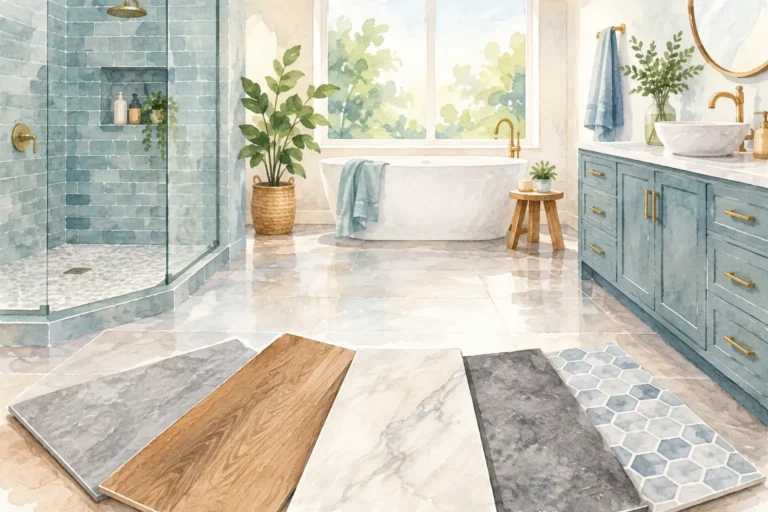
A Guide to Waterproof Bathroom Flooring Options
A bathroom floor has to perform under conditions most rooms never face: wet feet, steamy showers, splashes around the vanity, dripping towels, and the occasional plumbing surprise. This guide to waterproof bathroom flooring explains how to choose a surface that suits your design goals while protecting the structure below it. The best choice is rarely about color or price alone. It is about the material, the installation system, and how your household actually uses the room.
What “Waterproof” Really Means in a Bathroom
Homeowners often hear waterproof, water-resistant, and moisture-resistant used as though they mean the same thing. They do not. A waterproof flooring material will not absorb water or be damaged by ordinary surface moisture. Water-resistant flooring can tolerate limited exposure but may swell, stain, or fail if water sits on it repeatedly. Moisture-resistant products offer an added layer of protection, but they are not designed to manage standing water.
Even the strongest waterproof floor is only part of the equation. Water can reach a subfloor through open seams, unsealed edges, a failed toilet seal, or inadequate waterproofing around a shower. That is why professional preparation matters as much as the flooring selection. A beautiful bathroom floor should have a plan beneath it.
For a primary bath used by a busy family, a hall bath serving children, or a powder room with less daily moisture, the right level of protection can differ. The goal is not simply to buy the most expensive material. It is to build the right system for the space.
The Best Waterproof Bathroom Flooring Materials
Porcelain and Ceramic Tile
Porcelain tile remains one of the most dependable choices for bathroom flooring. It is dense, highly water-resistant, durable under foot traffic, and available in an exceptional range of colors, textures, sizes, and stone- or wood-look designs. Properly installed porcelain can create a refined floor that holds its value for decades.
Ceramic tile can also work well in a bathroom, particularly in lower-traffic spaces, though porcelain is generally denser and better suited to demanding conditions. The material itself is only one part of the installation. Grout joints, perimeter transitions, substrate preparation, and shower waterproofing all need careful attention.
Tile is especially effective when you want a custom look, radiant heat, or a continuous floor that coordinates with shower walls. Its trade-offs are cost, a longer installation process, and a harder, cooler feel without in-floor heat. Large-format tile can make a compact bathroom feel more open, but it also requires a very flat substrate for clean, lasting results.
Luxury Vinyl Plank and Luxury Vinyl Tile
Luxury vinyl plank, often called LVP, and luxury vinyl tile, or LVT, are practical options for homeowners who want comfortable flooring with a broad range of visual styles. Many products have waterproof cores and are designed to handle the normal splashes and humidity of a bathroom. They are warmer and softer than tile, generally quicker to install, and can convincingly resemble hardwood, limestone, concrete, or ceramic tile.
The key distinction is that waterproof planks do not automatically create a waterproof room. Click-lock joints, expansion gaps at walls, and transitions around tubs or vanities can permit water to reach the subfloor if installation details are overlooked. This is particularly relevant in bathrooms where young children bathe, pets are washed, or a shower is used heavily.
Quality matters. A well-made vinyl product with a substantial wear layer and a stable core will look better and perform longer than a bargain material. It is also wise to consider the pattern repeat, plank width, and finish. A floor should support the overall design rather than look like an afterthought.
Sheet Vinyl
Sheet vinyl is often overlooked, yet it remains one of the most practical waterproof bathroom flooring options. Because it can be installed with few or no seams across a small bathroom, it offers excellent defense against surface water. Modern sheet vinyl has progressed well beyond the limited patterns many homeowners remember, with convincing stone, wood, and graphic tile visuals available.
It is comfortable, cost-conscious, and particularly useful for secondary bathrooms, laundry-adjacent baths, or projects where dependable moisture performance is the priority. Installation quality is critical because the existing subfloor can telegraph through the material. Seam placement, adhesive selection, and precise cuts around fixtures affect both appearance and durability.
Natural Stone and Sealed Concrete
Natural stone brings depth and character that manufactured materials cannot fully duplicate. Marble, travertine, slate, and limestone can make a bathroom feel tailored and enduring, but stone is not maintenance-free. Most stone requires proper sealing and periodic resealing to resist staining and moisture absorption. Some polished surfaces can also become slippery when wet.
Sealed concrete can offer a clean, contemporary appearance, especially in a modern renovation or a home with an industrial architectural style. Like stone, it depends on correct surface preparation, a suitable sealer, and ongoing care. These materials can be excellent choices for homeowners who understand the maintenance commitment and want a distinctive finish.
How to Choose Flooring for Your Bathroom
Start with the room’s demands. A powder room may only need a durable surface that handles occasional splashes. A primary bathroom with a walk-in shower, freestanding tub, and daily traffic needs more rigorous planning. If the bathroom is above finished living space, moisture management becomes even more consequential.
Next, consider comfort and maintenance. Tile performs exceptionally well but may feel cold without radiant heat. Vinyl is gentler under bare feet and easy to clean, though it can be vulnerable to dents from sharp objects or heavy fixtures if the product is not suited to the application. Natural stone offers unmatched character but calls for more attentive care.
Design continuity also matters. In many Indianapolis-area remodels, the bathroom floor needs to relate to nearby bedroom flooring, cabinetry, countertops, and shower finishes. A floor does not need to match every surface, but it should create a deliberate transition. A skilled design process can prevent the common mistake of selecting attractive materials individually that compete once installed together.
The Installation Details That Protect Your Investment
A bathroom floor is only as reliable as the surface beneath it. Before installation, the subfloor should be evaluated for water damage, movement, unevenness, and structural concerns. A floor that flexes can crack tile and grout. A subfloor with prior moisture damage may need repair before any new finish is installed.
For tile, proper underlayment and crack-isolation or uncoupling methods may be necessary depending on the structure and condition of the floor. Shower areas require a dedicated waterproofing system behind and beneath the finished surfaces. These steps are not visible after completion, but they are where long-term performance is established.
For vinyl, the installer must address floor flatness, moisture conditions, and manufacturer requirements for adhesives or floating assemblies. Baseboards, shoe molding, and transitions should be planned carefully rather than used to conceal rough cuts. Around toilets, tubs, and vanities, precision helps reduce pathways for water intrusion.
A common misconception is that a bead of caulk can compensate for improper installation. Caulk has an important role at appropriate changes of plane and perimeter details, but it is not a substitute for a sound substrate or correct waterproofing. Lasting workmanship begins before the visible flooring arrives.
Don’t Forget Slip Resistance and Comfort
Bathrooms are wet zones, so traction deserves real consideration. A polished tile may look striking in a showroom but feel less secure under wet feet. Matte finishes, textured porcelain, smaller tile formats with more grout joints, and products rated for wet-area use can provide better traction without compromising style.
If comfort is high on your list, radiant floor heating beneath tile is worth discussing during a remodel. It adds expense upfront, but it changes the everyday experience of a bathroom during Indiana winters. It can also allow homeowners to choose durable tile without accepting a cold floor underfoot.
Plan the Floor as Part of the Whole Remodel
Bathroom flooring decisions affect vanity heights, door clearances, shower transitions, toilet flange placement, and adjoining-room thresholds. These details are easier and less costly to resolve during planning than after materials are ordered. They are also why a design-to-installation approach creates better outcomes than treating flooring as a separate purchase.
At Edwards Design Group, material selection and installation planning are considered together so homeowners can see how their floor will support the finished bathroom, not just how a sample looks under showroom lighting. The right floor should feel intentional, withstand daily life, and give you confidence every time you step into the room.
Choose the material that fits your household, then give the preparation and installation the same level of attention. That is how a bathroom floor earns its place as a lasting part of your home.