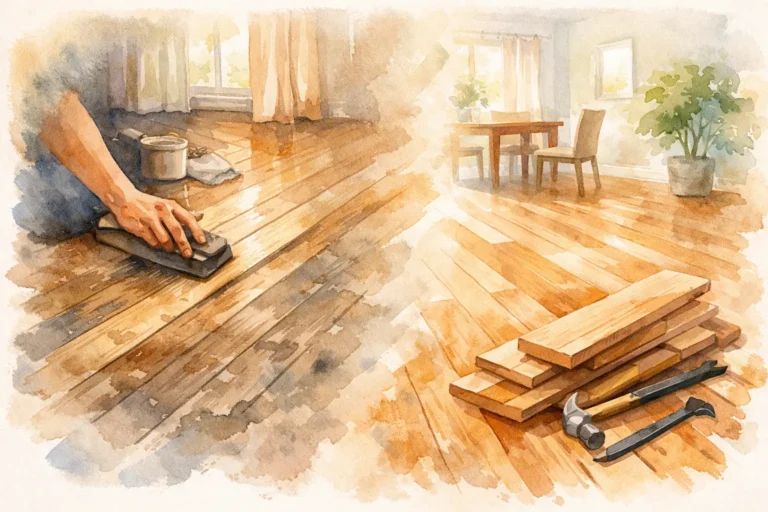
Refinishing vs Replacing Hardwood for Your Home
A hardwood floor can make a room feel established, warm, and intentional. But deep scratches by the kitchen island, faded paths through the living room, or boards that move underfoot can change the conversation quickly. The decision around refinishing vs replacing hardwood is not simply about what looks best this year. It is about the floor’s remaining life, the condition beneath it, the way your household uses the space, and the larger design direction for your home.
A well-executed refinishing project can preserve character and deliver remarkable value. Replacement can solve structural concerns, improve function, and create the precise foundation a renovation needs. The right answer begins with an honest assessment rather than an assumption based on surface appearance.
When Refinishing Hardwood Is the Right Investment
Refinishing is often the best path when the hardwood itself is fundamentally sound. Solid hardwood floors were made to be renewed, and many can be sanded and refinished several times over their lifespan. If the boards are stable, dry, and thick enough for another sanding, a new finish can remove surface scratches, dullness, minor staining, and years of everyday wear.
This option is particularly compelling when you appreciate the existing species, board width, and layout. Original oak flooring, for example, may be a defining feature of an older Indianapolis home. Refinishing preserves that material while giving you the opportunity to update its color and sheen. A natural matte finish can make traditional boards feel more current, while a warmer stain may better connect the floor to new cabinetry, countertops, or trim.
Refinishing also makes sense when the floor is part of a larger but selective update. Perhaps you are remodeling a kitchen while keeping hardwood that extends into the dining room and adjoining hall. Preserving those continuous boards can avoid unnecessary transitions and maintain visual flow across the main level.
Still, refinishing is not a cosmetic shortcut. Proper results require careful sanding, edge work, repair of minor imperfections, stain testing where applicable, and a finish system suited to the room. The preparation and curing period matter as much as the color selection. Homeowners should plan for furniture removal, temporary disruption, and limited use of the area while the finish hardens.
Signs Your Floor Is a Strong Refinishing Candidate
Surface wear alone is rarely a reason to replace hardwood. Refinishing is worth considering when scratches have not cut deeply into the wood, the boards lie flat and secure, and staining is limited to the finish layer or small repairable areas. Floors with a dated orange tone, uneven sheen, light pet damage, or traffic patterns near doorways can often be transformed without removing the existing material.
The question is less about whether the floor looks tired and more about whether it has enough sound material left to renew. A professional evaluation can determine the thickness of the wear layer, identify prior sanding, and distinguish ordinary gaps from movement caused by moisture or subfloor conditions.
Refinishing vs Replacing Hardwood: The Deciding Factors
Replacement becomes the stronger choice when the issues go beyond the finish. Extensive water damage, broad cupping or crowning, recurring movement, insect damage, severe pet staining, or boards that have been sanded too many times may indicate that the floor no longer has a reliable future. Sanding a compromised floor can make defects more visible and delay a repair that should have been addressed at the source.
Water is one of the most important factors. A one-time spill that was cleaned quickly may leave little behind. A dishwasher leak, plumbing failure, wet basement condition, or long-term humidity imbalance can affect the boards, the subfloor, and the framing below. Replacing the visible hardwood without correcting the moisture source is not a lasting solution. The same is true for persistent squeaks or soft spots, which can point to fastening, leveling, or subfloor problems that deserve attention before a new floor is installed.
Design goals can also justify replacement even when refinishing is possible. Homeowners may want wider planks, a different species, a more consistent grade, or a new direction of installation that better suits an open layout. During a full kitchen renovation, replacing flooring may allow the material to run beneath new cabinetry or create a cleaner relationship between the island, adjoining rooms, and thresholds.
Engineered hardwood requires a more careful evaluation. Some engineered products have a thick enough top layer to be refinished once, while others do not. The product’s construction, the depth of existing wear, and the installer’s assessment determine what is safe. Assuming every wood floor can be sanded is an expensive mistake.
Consider the Whole Project, Not Just the Floor
A flooring decision has a way of touching nearly every detail around it. Refinishing usually keeps floor height consistent, which can simplify existing doors, baseboards, stair nosings, and transitions to tile or carpet. Replacement may require adjustments in those areas, particularly if the new product has a different thickness.
That added scope is not necessarily a drawback. When a project includes new cabinetry, a remodeled bathroom, updated trim, or an open-concept reconfiguration, replacement can be the more coordinated option. It gives the design team greater control over material continuity, transition placement, and the finished proportions of the room.
Budget should be evaluated in the same complete way. Refinishing often costs less than full replacement because it preserves the wood already in place. Yet a low initial price does not make it the better value if major repairs, repeated stain treatment, or subfloor correction are still needed. Replacement involves new materials and installation, but it can be the more durable investment when the existing floor has reached the end of its serviceable life.
The practical realities of living through the work matter, too. Refinishing creates sanding activity, temporary dust-control measures, finish odor, and cure time. Replacement can involve demolition, disposal, deliveries, and potential work on the subfloor. Neither process is entirely disruption-free. A well-planned project sets expectations early and sequences the work around the household’s needs.
How to Make a Confident Decision
Start by looking beyond the most visible damage. Note where the problems occur, whether they are getting worse, and whether they coincide with plumbing, exterior doors, pets, or changes in humidity. A worn pathway in a hallway tells a different story than dark stains around a refrigerator or cupped boards beside a patio door.
Next, consider what you want the finished space to accomplish. If you love the layout and character of the current floor, refinishing may be the most purposeful choice. If your home needs a new material direction, improved durability, or repairs that reach below the boards, replacement can create a cleaner and more dependable result.
It is also wise to make flooring selections alongside the other permanent finishes in the room. Cabinet colors, countertop movement, wall paint, tile, metal finishes, and natural light all influence how a hardwood color reads. Samples viewed only under showroom lighting can be misleading. Reviewing them in the actual space, at different times of day, leads to more confident choices.
For homeowners planning a remodel in Carmel, Fishers, Indianapolis, or nearby communities, a design-to-installation conversation can prevent costly disconnects between the floor you choose and the work required to support it. Edwards Design Group evaluates the construction details as carefully as the finish, helping clients make decisions that serve both the room and the way they live in it.
Your hardwood does not need to be perfect to be worth saving. But it does need to be sound enough to support the next chapter of your home. Let the condition of the floor, the needs of the space, and the quality of the installation guide the decision – then choose the path that will still feel right after the renovation dust has settled.