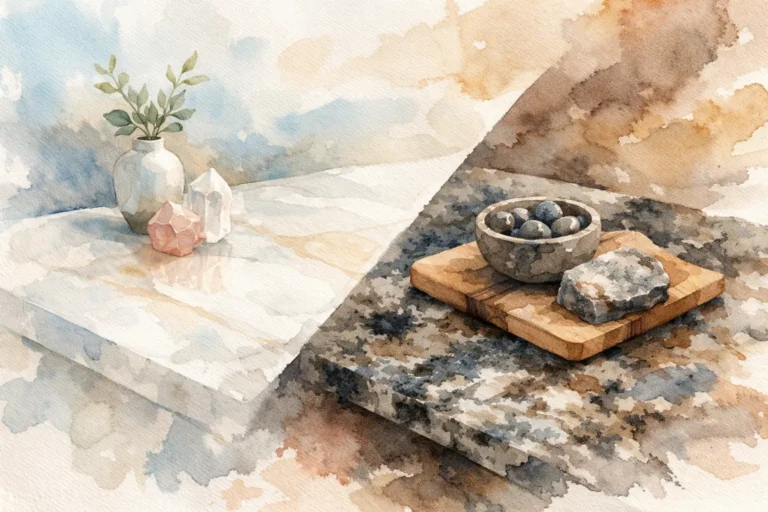
Quartz vs Granite Countertops: Which Is Better?
A countertop has to do more than look right under showroom lighting. It needs to handle hot pans, busy mornings, family meals, cleanup, and the design decisions surrounding cabinets, flooring, backsplashes, and lighting. When comparing quartz vs granite countertops, the better choice is rarely a universal answer. It is the surface that best fits how you use the room and what you expect from your investment over time.
Quartz vs Granite Countertops at a Glance
Quartz and granite can both create a substantial, high-end focal point in a kitchen or bathroom, but they get there in different ways. Granite is a natural stone cut from the earth, so every slab carries its own mineral movement, veining, and variation. Quartz is an engineered surface made primarily of natural quartz minerals combined with resins and pigments. Its pattern and color are designed for greater consistency.
For homeowners who want a calm, controlled palette with little visual surprise, quartz is often the easier material to specify. For those drawn to one-of-a-kind movement and the character of natural materials, granite has an appeal that cannot be duplicated exactly.
The decision should also account for practical matters: your cooking habits, tolerance for routine maintenance, slab layout, edge details, and the rest of the room. A beautiful slab chosen without considering these details can create avoidable compromises later.
Appearance: Natural Variation or Designed Consistency
Granite has depth that comes from its geological origin. Depending on the slab, it may feature subtle grains, dramatic mineral deposits, warm tones, or sweeping movement. That individuality can make a kitchen feel grounded and distinctive, particularly with wood cabinetry, statement hoods, or a design that benefits from organic texture.
The same variation requires more careful selection. A small showroom sample cannot fully represent a granite slab. Before fabrication, it is wise to view the actual material and discuss where prominent veining, color changes, or natural features will fall across the finished countertop. This is especially important for large islands, waterfall edges, and countertops with multiple seams.
Quartz offers a broader range of controlled looks. It can be clean and modern, softly mottled, or patterned to resemble marble or natural stone. The consistency makes it easier to coordinate with cabinets, tile, and flooring, particularly when a homeowner wants a specific color relationship throughout the space.
That consistency does not mean quartz looks flat. Premium selections can have substantial movement and visual depth. Still, homeowners who value the irregular beauty of a true natural slab may find granite more compelling once they see the full material in person.
Durability Depends on the Kind of Wear
Both materials are durable enough for active households when professionally installed and used with reasonable care. Their vulnerabilities are simply different.
Quartz is nonporous, which makes it highly resistant to staining from common kitchen spills such as coffee, wine, cooking oils, and sauces. It does not require sealing, and its smooth surface is straightforward to clean. This is a meaningful advantage in a busy kitchen or bathroom where low-maintenance performance matters.
However, quartz contains resins that can be damaged by excessive heat. Setting a hot skillet, roasting pan, or slow cooker insert directly on the countertop can leave discoloration or cause thermal stress. Trivets are a small habit, but they are necessary. Quartz can also scratch or chip at an exposed edge if it receives a sharp impact.
Granite generally performs better around heat, though a trivet is still the prudent choice for protecting any countertop and avoiding sudden temperature changes. It is highly scratch-resistant under normal use and holds up well in hardworking kitchens. Its primary maintenance consideration is porosity. A properly sealed granite countertop resists staining well, but the sealer needs periodic renewal based on the stone and the product used.
Neither surface should be treated as a cutting board. Knives can damage the finish, and the countertop can dull the blade.
Maintenance: Daily Simplicity Versus Periodic Care
Quartz is often the simpler choice for homeowners who want minimal upkeep. For regular cleaning, a soft cloth, warm water, and a mild cleaner are usually sufficient. Avoid abrasive pads and harsh chemicals that can affect the resin finish.
Granite also cleans easily day to day, but it asks for more attention over its lifetime. Sealing frequency varies. Some stones hold a sealer for years, while others may need more regular care depending on use, color, and porosity. A fabricator or installer can give practical guidance for the specific slab rather than relying on a one-size-fits-all schedule.
The maintenance difference is not necessarily a reason to rule out granite. Many homeowners are happy to care for a natural stone surface because its character is central to the design. It is simply a factor worth deciding on before the material is installed.
Cost Is More Than the Price Per Square Foot
Quartz and granite both span a wide price range. Entry-level options may be comparable, while premium quartz designs and rare granite slabs can each move well beyond a typical allowance. Material cost alone does not tell the full story.
Countertop pricing is affected by slab size, thickness, edge profile, cutouts for sinks and cooktops, backsplash details, seam placement, delivery access, and installation complexity. A large island may require more than one slab, while a dramatic pattern may require additional material to align veining at seams. A mitered edge that creates a thicker visual profile adds a different level of fabrication precision than a standard eased edge.
When reviewing an estimate, compare the finished scope rather than only comparing a square-foot number. The right question is whether the proposal accounts for the design, fabrication, structural support, and installation details required for a lasting result.
What Works Best in Kitchens and Bathrooms?
In a kitchen, quartz is often a practical fit for homeowners who prioritize easy cleanup, consistent color, and a polished contemporary appearance. It performs particularly well in family kitchens where spills are frequent and time for maintenance is limited.
Granite is an excellent kitchen choice for homeowners who cook often, appreciate natural stone, and want a surface with individual character. It can be especially effective in spaces where the countertop is intended to be a visual centerpiece rather than a quiet backdrop.
In bathrooms, quartz is frequently favored because of its nonporous surface and easy care around cosmetics, soap, and moisture. Granite can also work beautifully in a bathroom, especially in a powder room or primary bath where a distinctive slab can elevate the entire vanity design. The choice comes down to the desired aesthetic and comfort with sealing.
Installation Details Matter as Much as Material Choice
A quality countertop starts before the slab is cut. Cabinets must be level, securely installed, and capable of supporting the selected material. Overhangs may need concealed brackets or steel support. Sink cutouts, faucet locations, appliance clearances, and wall conditions all need to be verified before fabrication.
This is where design and construction experience make a measurable difference. A countertop may be the visible finish, but it depends on precise field measurements, thoughtful slab layout, proper seam placement, and careful installation. Small errors can affect alignment, reveal gaps, stress the stone, or create a finish that looks less intentional than the rest of the remodel.
For Indianapolis-area homeowners planning a kitchen or bath renovation, Edwards Design Group helps coordinate these decisions within the larger design – from cabinetry and layout through material selection and professional installation. The goal is not simply to install a countertop, but to build a room that functions beautifully and holds up to daily life.
Choose the Surface That Supports Your Home
Choose quartz if predictable color, low maintenance, and strong stain resistance are at the top of your list. Choose granite if you want natural variation, exceptional heat tolerance, and a slab with a character all its own. Either can be a lasting investment when the material, fabrication plan, and installation standards are matched to the way you live.
Before making a final selection, view full slabs, bring cabinet and flooring samples, and talk through the details that affect the finished result. The surface you choose should feel right not only on installation day, but through years of meals, gatherings, projects, and everyday use.